Menu

Sequoia Scientific

LISST-RTSSV

Real-Time Size and Settling Velocity Instrument

The LISST-RTSSV measures in-situ particle size, settling velocity, and concentration.

See a list of papers published with LISST-RTSSV data here!

The LISST-RTSSV uses two cameras with differing magnification to image particles ranging from 3.6 microns to 4,200 microns. In-situ particle setting velocity is measured using a built-in settling column that can be sealed off from the environment. Particles and water are drawn into the chamber and allowed to settle past the cameras. Particles are counted, sized, and tracked via image processing software.

Originally developed for studying sediment plumes related to deep-sea mining operations, the LISST-RTSSV has broad applicability in other industries such as environmental monitoring, dredging, and sediment research where understanding the transport and fate of particles is critical.
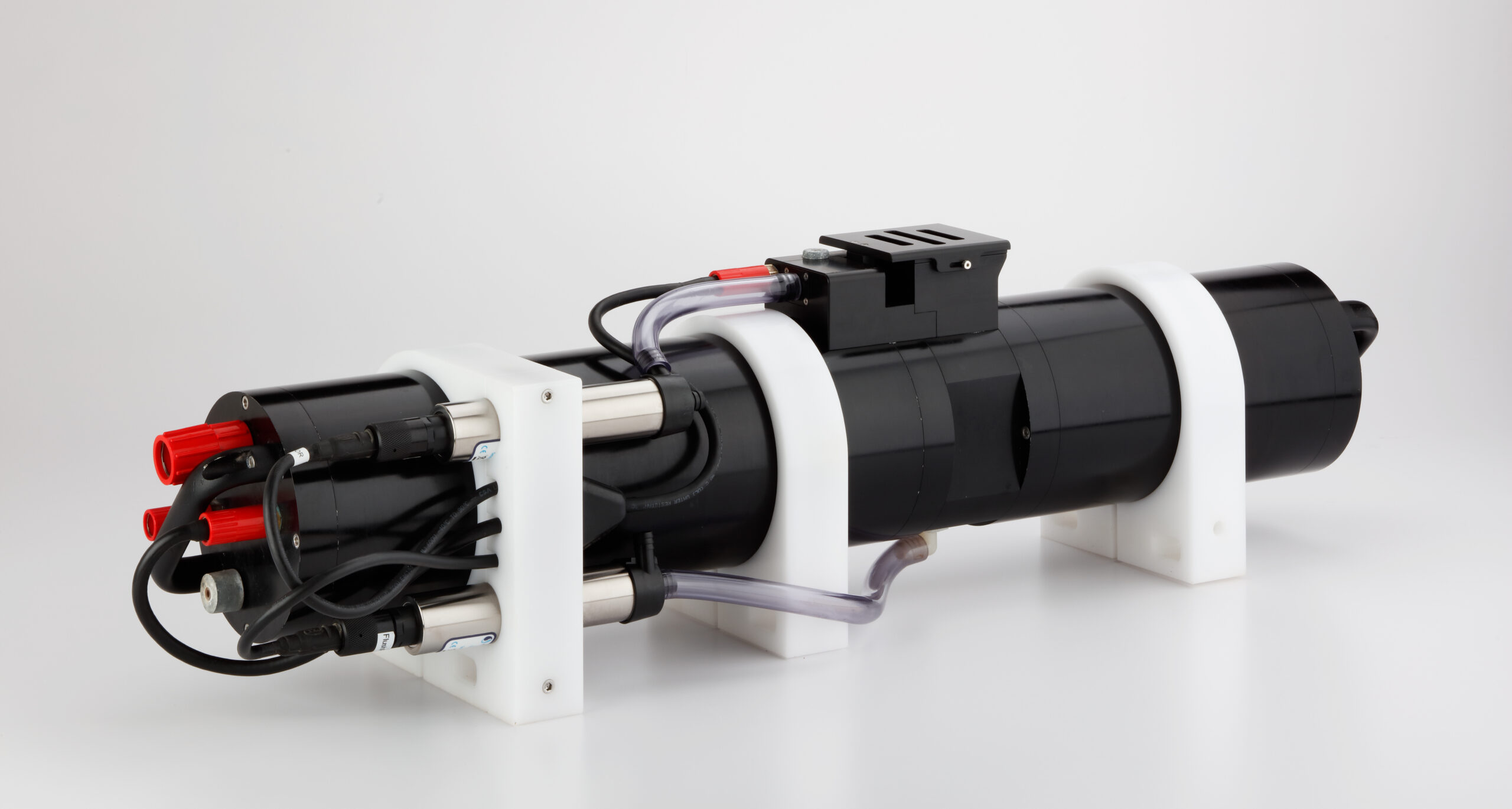
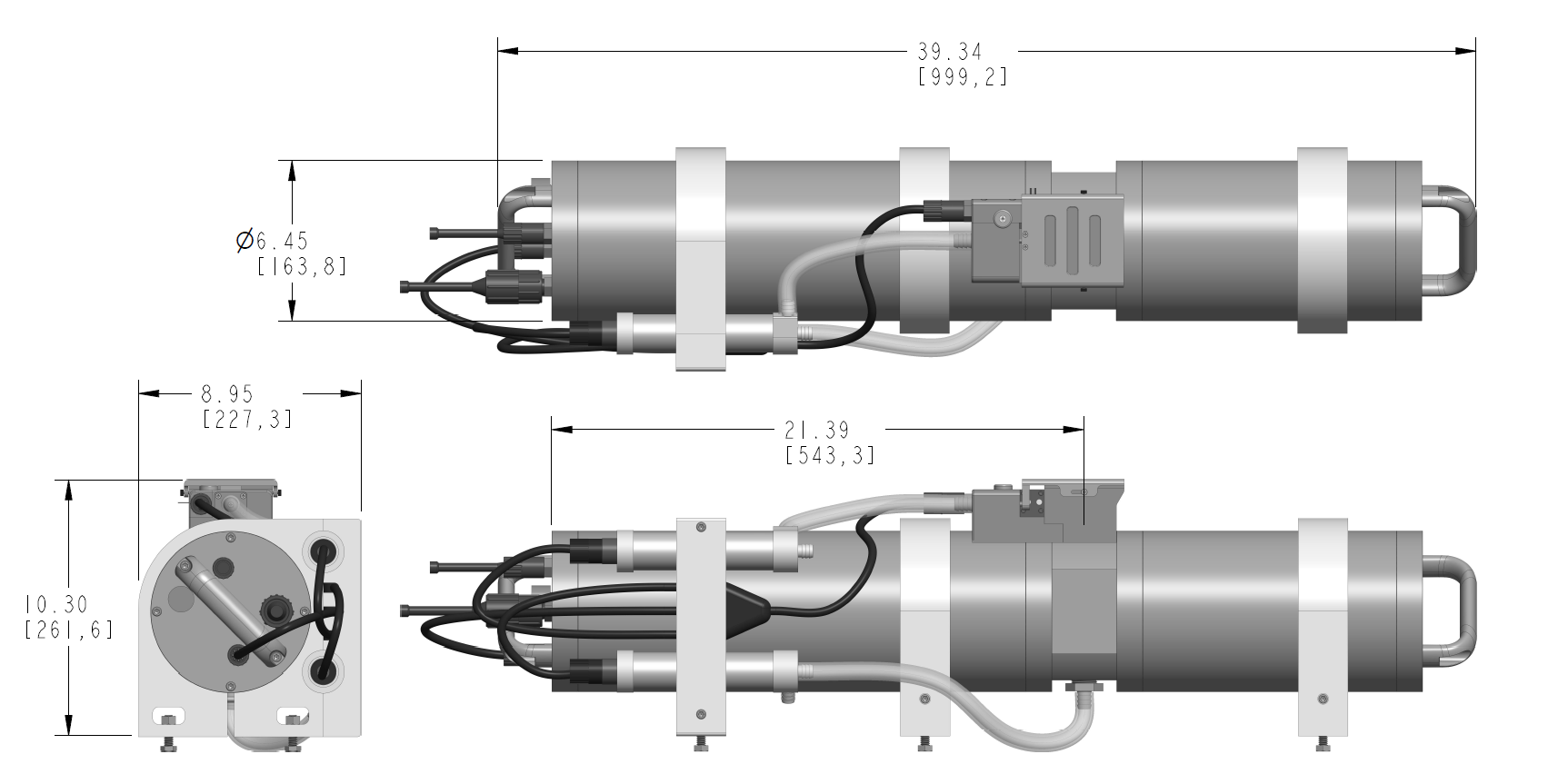
Features

• Dual high-resolution particle cameras
• Vertical settling velocity column
• 6,000 meter depth rating
• Pump operated settling column door designed for deep sea use
• Software included with instrument
• Accessory cable lengths available as desired
• Externally powered
• Internal data logging
• Instrument ships in rugged case

Specifications

Parameters Measured
• Particle Size (3.6 µm to 4,200 µm)
• Volume Concentration
• Particle Setting Velocity (10 µm/s to 17,000 µm/s)

Technology
• Small Particle Camera (SPC) and Large Particle Camera (LPC) with overlapping fields of view
• Telecentric illumination

Mechanical and Electrical
• Dimensions [W x H x L]: 22.86 cm x 25.4 cm x 101.6 cm (9” x 10” x 40”) including the clamps, pump and door assembly
• Weight [air / seawater]: 40.82 kg / 20.41 kg (90 lbs / 45 lbs)
• Depth rating: 6,000 m
• Material: black anodized aluminum w/sacrificial anode protection
• External power input: 12 VDC to 30 VDC
• Current drain: 1.3 A (max) @ 24 V
• Sampling Rate: 10 Image pairs per second
• Storage: 1.74 TB internal hard drive (approx. 100,000 image pairs)
• Connectors: SubConn MCBH5M, MCBH8M, DBH8M
• Temperature (operating): -3 °C to 40 °C
• Temperature (storage): -20 °C to 60 °C

Items

LISST-RTSSV Item # and Description

Item #DescriptionThumbnail
SEQ-FP-LRTSSVLISST-RTSSV - Real-Time Size and Settling Velocity instrument
SEQ-AC-LRTSSV-SERV3-YEAR SERVICE PLAN
One-time service of instrument within 36 months after delivery.
Includes one-way return shipping from Sequoia, all evaluation, diagnosis, testing and calibration.
Parts and labor for repairs not included.
Must be purchased together with new instrument.
NOTE: End-user responsible for return shipment DDP to Sequoia.

FAQ

Does the LISST-RTSSV measure temperature and depth?

No. The LISST-RTSSV is designed for integration and has no temperature or pressure sensor.

Does the LISST-RTSSV have internal power?

No. The LISST-RTSSV is designed for integration and does not have any internal power. Sequoia does not offer battery packs for the LISST-RTSSV.

We recommend the Sea Battery Power Module from Deep-Sea Power and Light – that is the battery we at Sequoia use for our own LISST-RTSSV test deployments.

Can I rent the LISST-RTSSV?

No.

Can a CTD power the LISST-RTSSV?

It depends on the CTD: The RTSSV operates on 12 V with a current draw of around 2.6 A at 12 V. If the CTD can provide that it will be fine. Check with your CTD supplier or CTD data sheet.

A Sea-Bird 911 CTD is 14.3 V with a maximum current of 1 A, so a 911 will not be able to power the LISST-RTSSV.

Can we leave the settling door open and continuously slowly pump particles through the chamber as the CTD is descending and ascending?

First, see above for power requirements. If the CTD can meet those, it is possible to remove the door and operate the other pump.

On a CTD, what is the best way to figure out where the LISST-RTSSV is in the water column (given that it has no pressure sensor)?

The images are time stamped, and they would have to be matched against the CTD data stream and time stamp afterwards.

We want to integrate the LISST-RTSSV into a subsea observatory. Can we offload images while it is collecting data?

Yes, when the instrument is connected to Ethernet, images can be offloaded, and the images can be accessed as a network drive.

Can the LISST-RTSSV be installed on a mooring?

Yes and no. Apart from the issues getting power to it on a mooring string (see FAQ re power), the LISST-RTSSV settling velocity measurement will only work if the settling column is vertical. If the settling column is tilted the Boycott effect comes into play: settling in a column with inclined surfaces produces a convective flow in the column that transports particles along the column surfaces much faster than their settling velocities alone.

Will the LISST-RTSSV work if mounted on an ROV?

During the TMC deployment (fall 2022) the LISST-RTSSV was integrated onto a 6,000 m rated work-class ROV. This worked very well for Particle Size Distribution (PSD) measurements.

For Settling Velocity (SV) measurements, it was necessary to have the ROV not work for some time while the SV measurement was being made. The reason for this was that the ROV had to be in a completely horizontal position, so that the LISST-RTSSV settling column was in a completely vertical orientation.

Vibrations from the ROV were generally not an issue for the measurements. But it is important to understand that instrument tilting during the SV measurement will be a serious issue that dramatically will contaminate the SV measurement. The settling column must be vertical the entire time w/o any tilt during the measurement.

By far, the best platform for settling velocity measurements is a stationary system like a lander or a bottom tripod with a gimbal that keeps the LISST-RTSSV horizontal and the settling column vertical at all times.

How do I integrate the LISST-RTSSV onto an ROV or AUV?

You need to discuss with the ROV or AUV manufacturer. They can provide exact information on the power and communication options that your vehicle has cf. the LISST-RTSSV requirements for power and communication (see the datasheet).

LISST-RTSSV pinouts are available in the LISST-RTSSV manual and the vehicle manufacturer can provide information on the connector type and pinouts they use. Sequoia can provide 3D-files of the LISST-RTSSV pressure housing and body that will allow you to design brackets and clamps for installing the LISST-RTSSV on the vehicle. You will probably need to work with the vehicle manufacturer and/or a systems integrator to manufacture cables and hardware for mounting the LISST-RTSSV on the vehicle.