The Boycott effect refers to the substantial enhancement of particle sedimentation rates in settling columns that are inclined relative to gravity, compared to an otherwise identical vertical settling column. It was first observed experimentally by A. E. Boycott (1920) during studies of blood sedimentation, but it has since become an important concept in sedimentation theory:
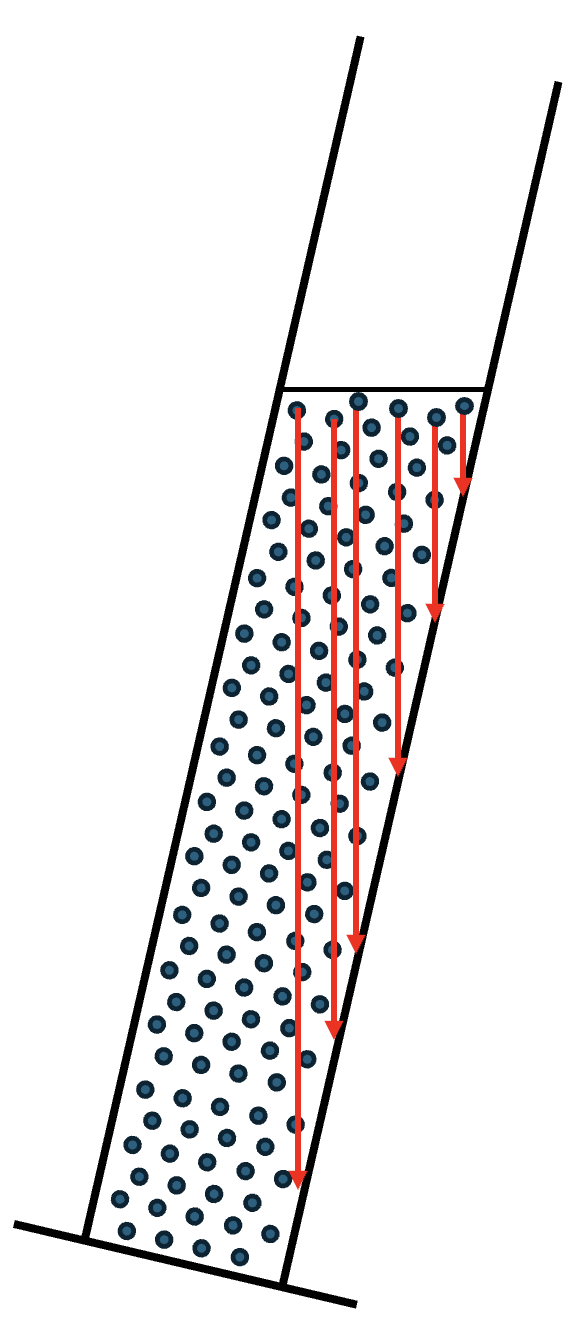
In a vertical settling column, particles fall through quiescent water. Settling occurs purely as individual or hindered particle settling. This is indicated in the figure below.
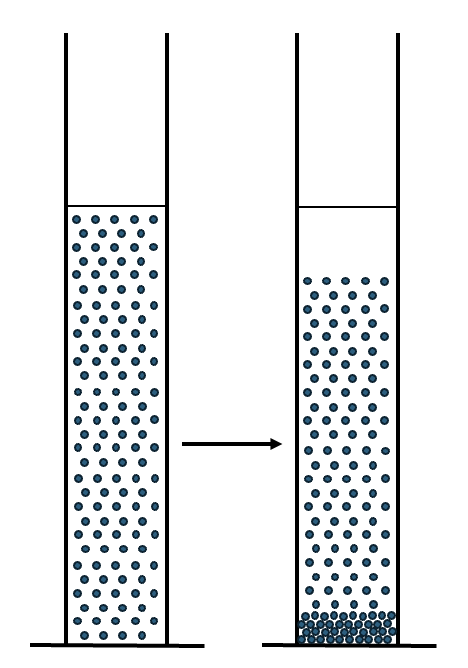
However, when a settling column is inclined, sedimentation becomes strongly coupled to buoyancy-driven convection, producing the Boycott effect:
- Particle accumulation on the downward-facing wall
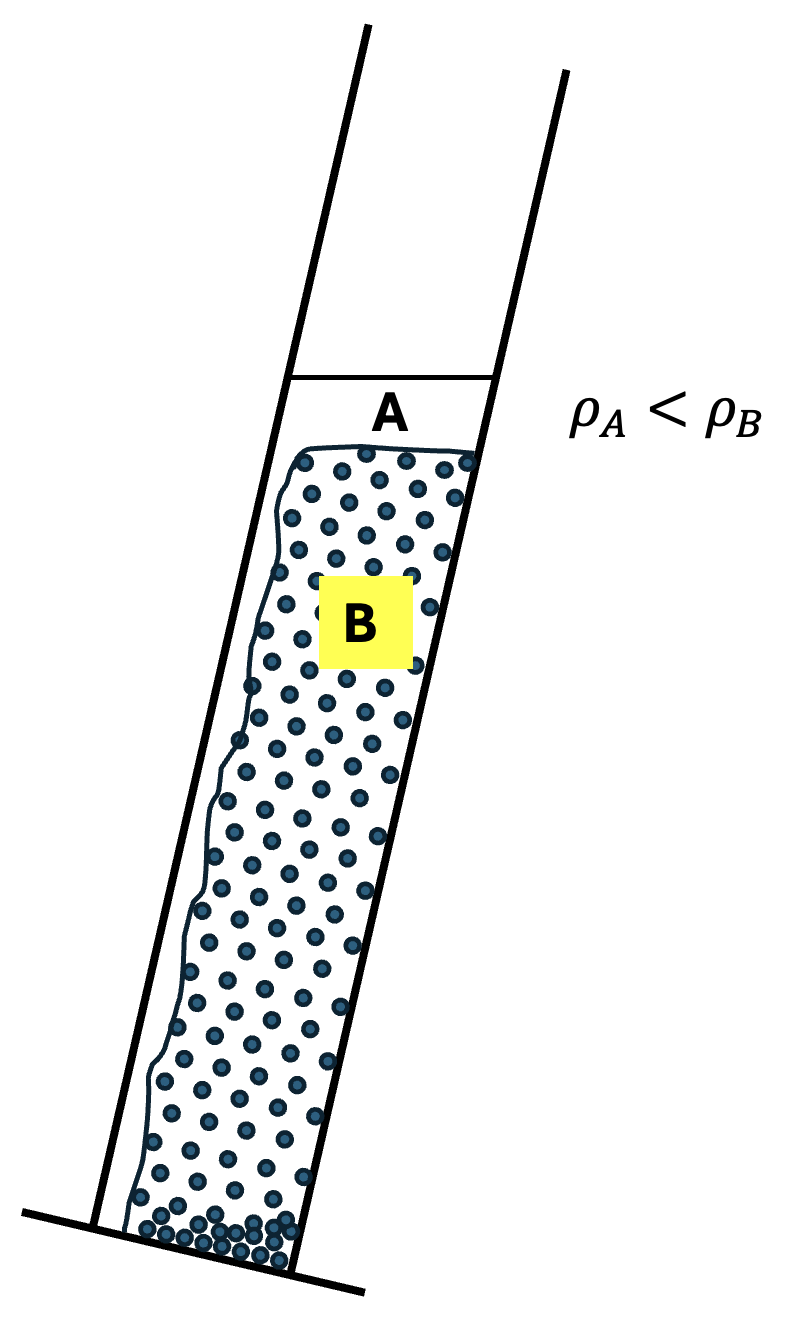
Settling particles quickly reach the inclined wall, forming a dense, particle-rich layer along it. This forms a convective flow driving particles down along the wall, like a small gravity current.
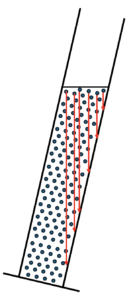
- Formation of a clear-fluid boundary layer
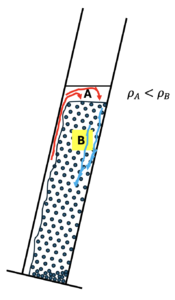
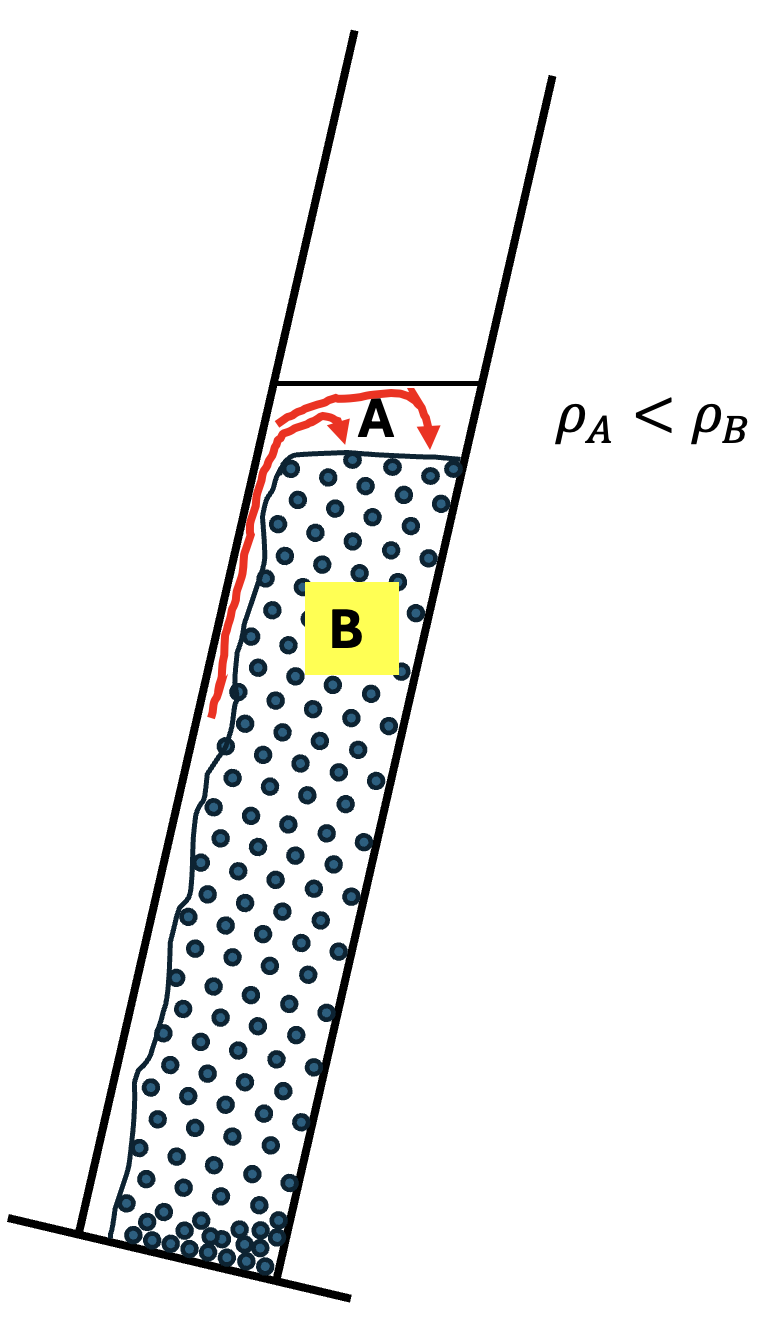
The particle-depleted fluid (A) adjacent to the inclined wall is less dense than the bulk suspension (B), which contains particles.
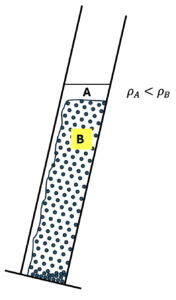
- Upward convection of clarified fluid
This density contrast drives a narrow, upward-flowing “clear-water slit” along the inclined wall, transporting particle-free water upward (red arrows) much faster than sedimentation alone.
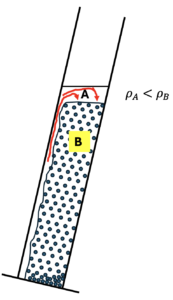
- Enhanced bulk sedimentation rate
The upward removal of clear fluid forces particle-rich water downward (blue arrows), adding to the convective flow of particles.
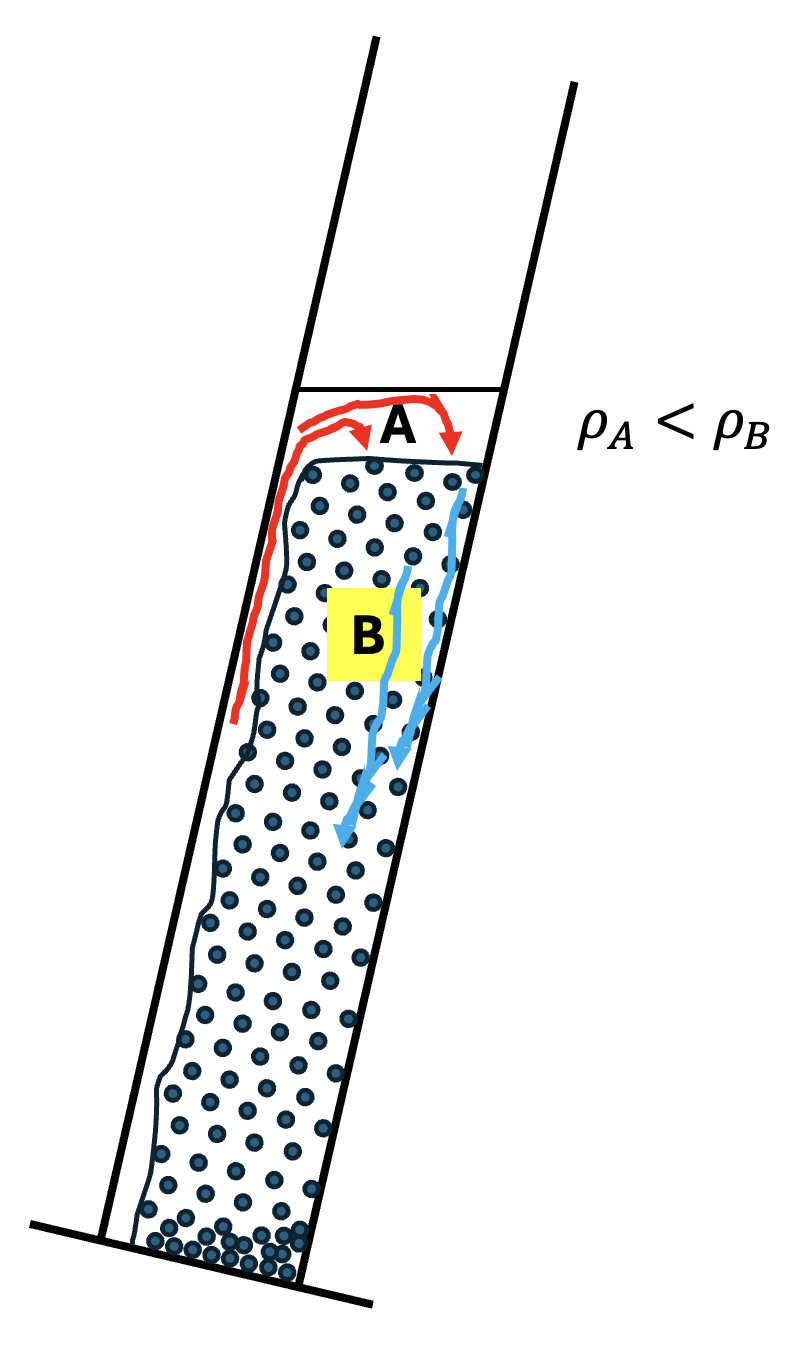
The combined results of these effects is that i) the effective settling distance becomes the distance between the settling column walls, not the settling column length, and that ii) the effective particle settling velocities may increase by up to order-of-magnitude compared to individual particle settling in a vertical column.
You can see a YouTube video of the Boycott effect here.