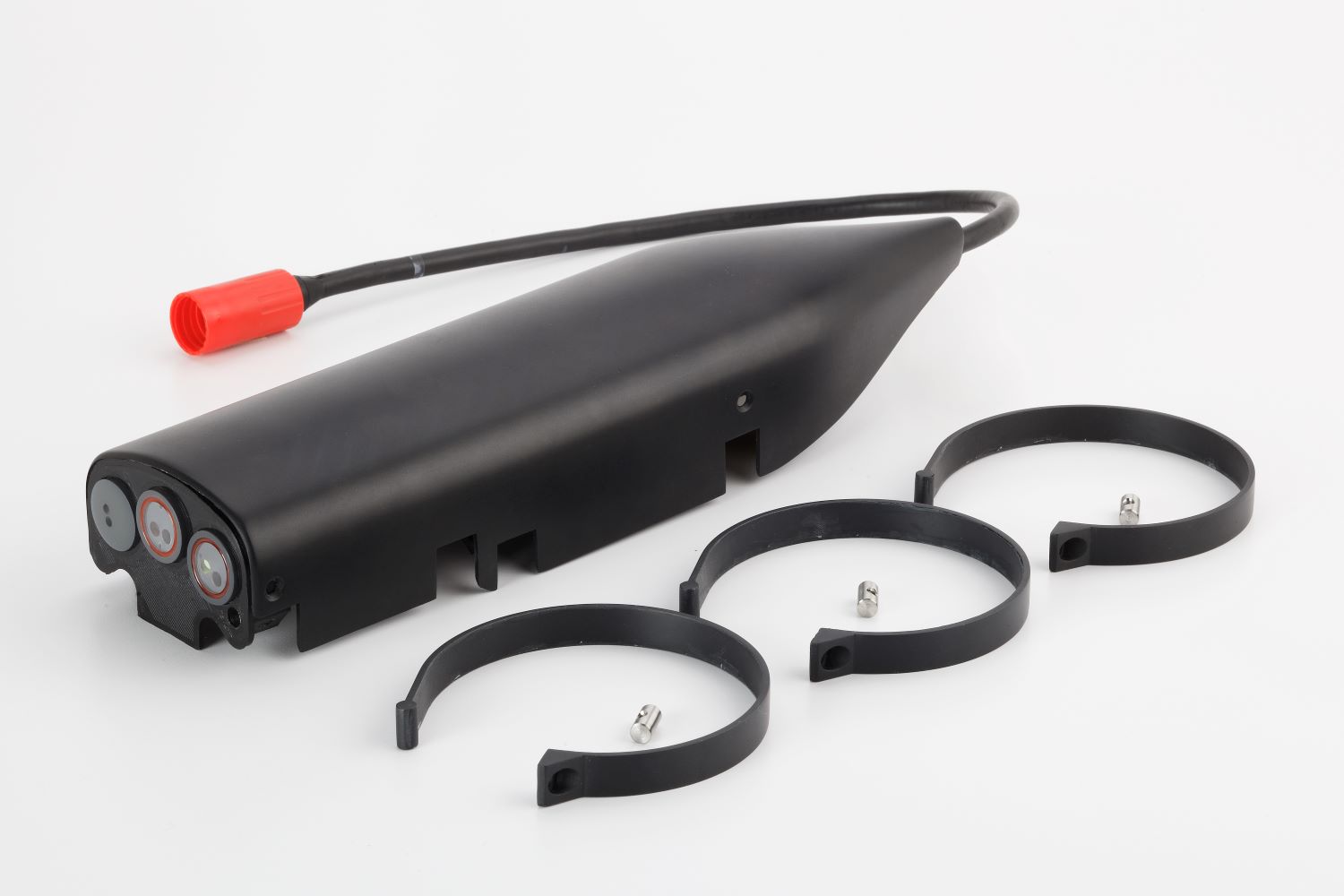
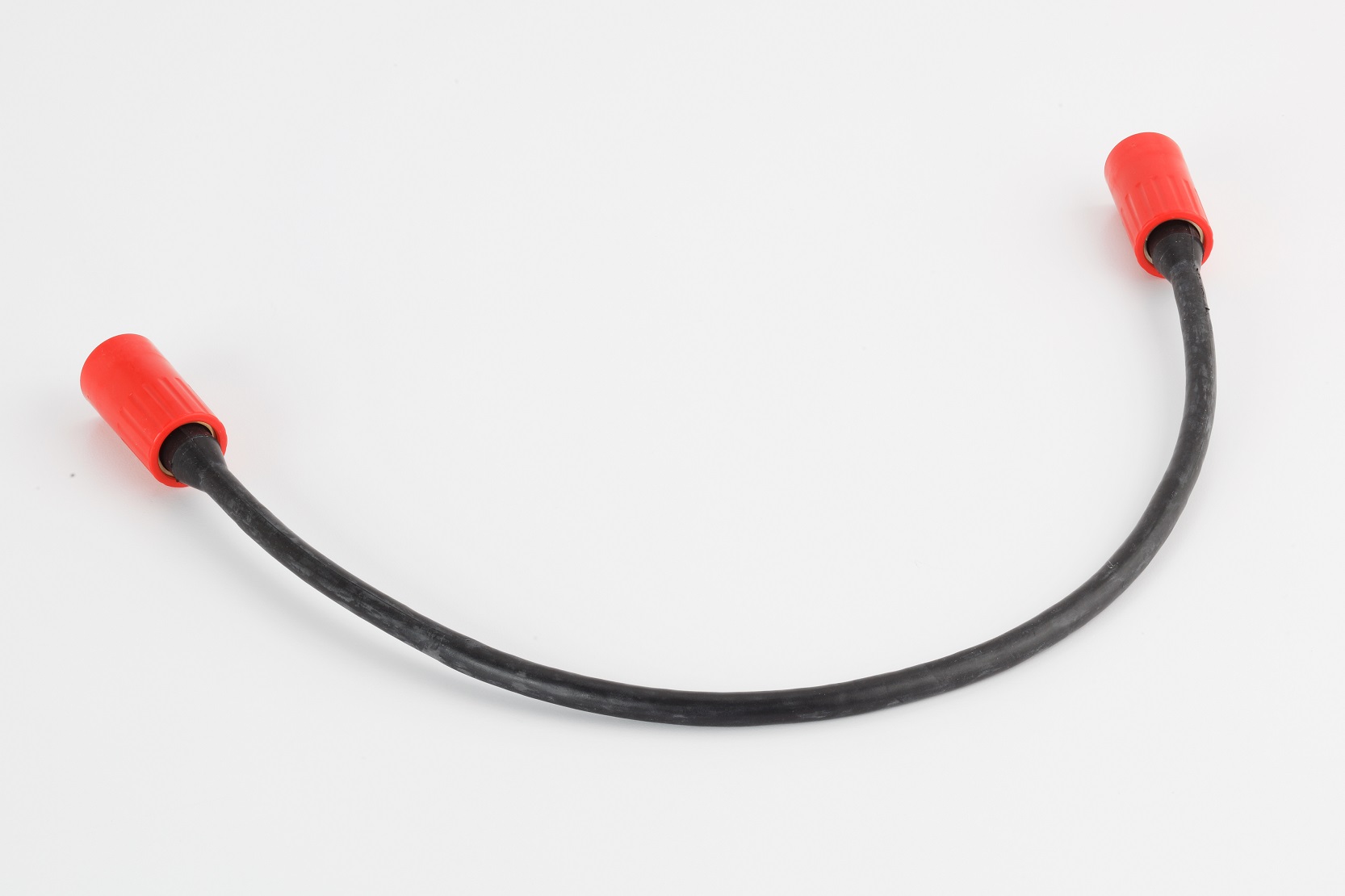
Specifications
Technology
- Small-angle forward scattering
- 32-ring custom photodiode Ring Detector + 4 large angle detectors
- 25 mm optical path
Parameters measured
- Particle Size Distribution from 1.0-500 µm in 36 size ranges
- Depth (600 m max depth @ 0.01 m resolution; 200 m with BioBlock installed)
- Temperature @ 0.01 deg C resolution
- Optical transmission @ 0.1% resolution
- Volume Concentration @ 0.1 µl/l resolution
- Volume Scattering Function from 0.039 to 13.8 degrees in water
- Analog output of Mean Size and Volume Concentration
Operating Concentration range
- Optical transmission from 0.3-0.99 (30-99%)
- Concentration from ~ 0.5-700 mg/l (grain-size dependent)
Mechanical and electrical
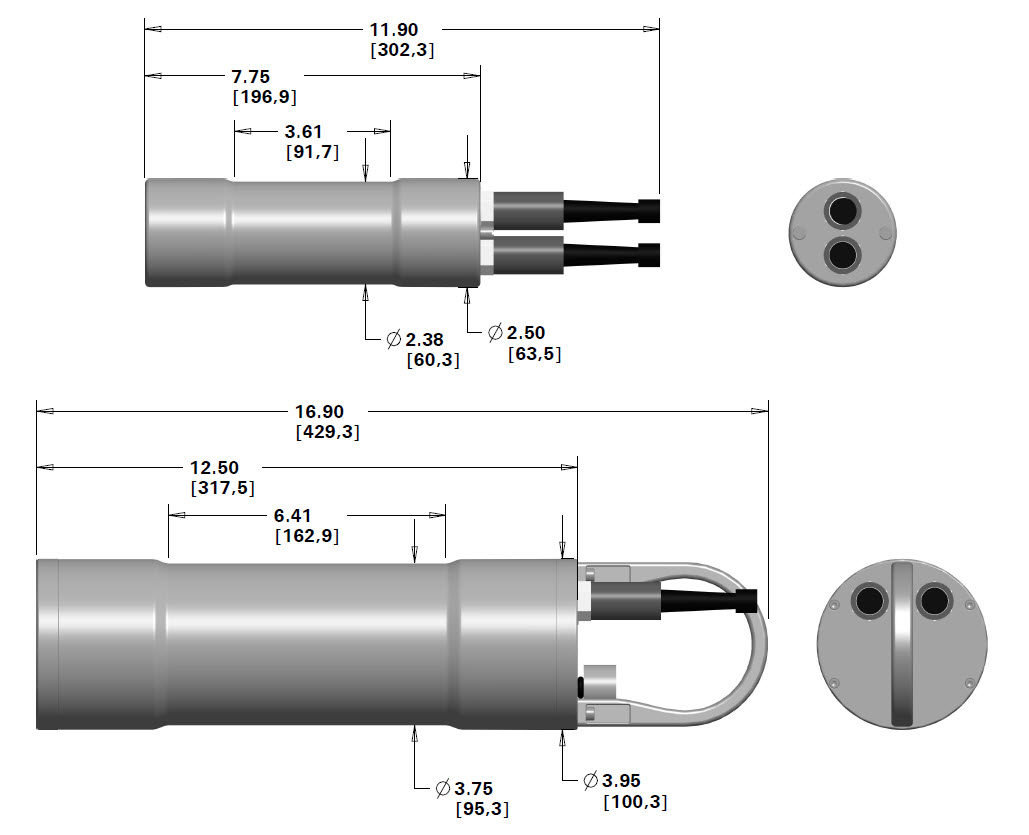
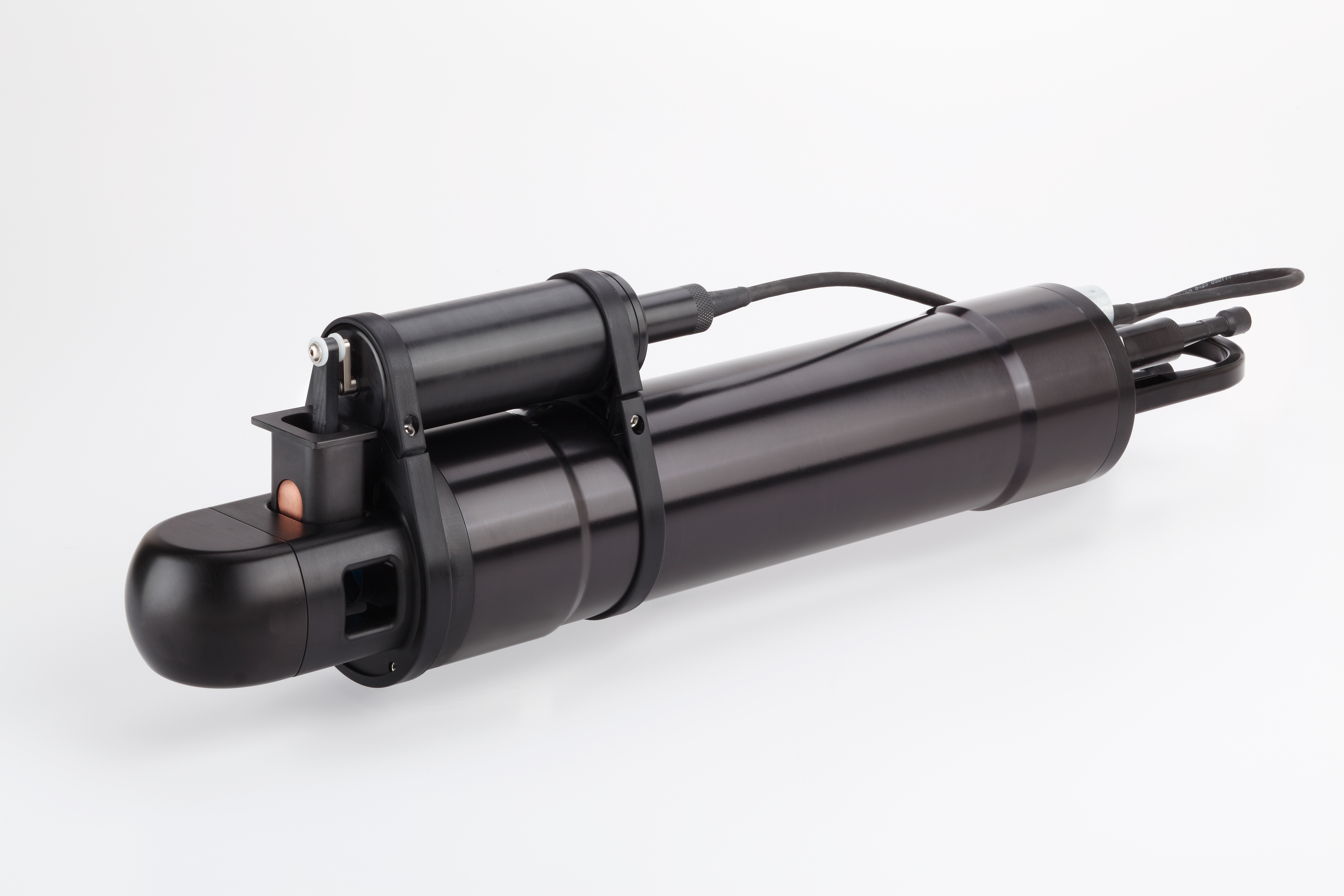
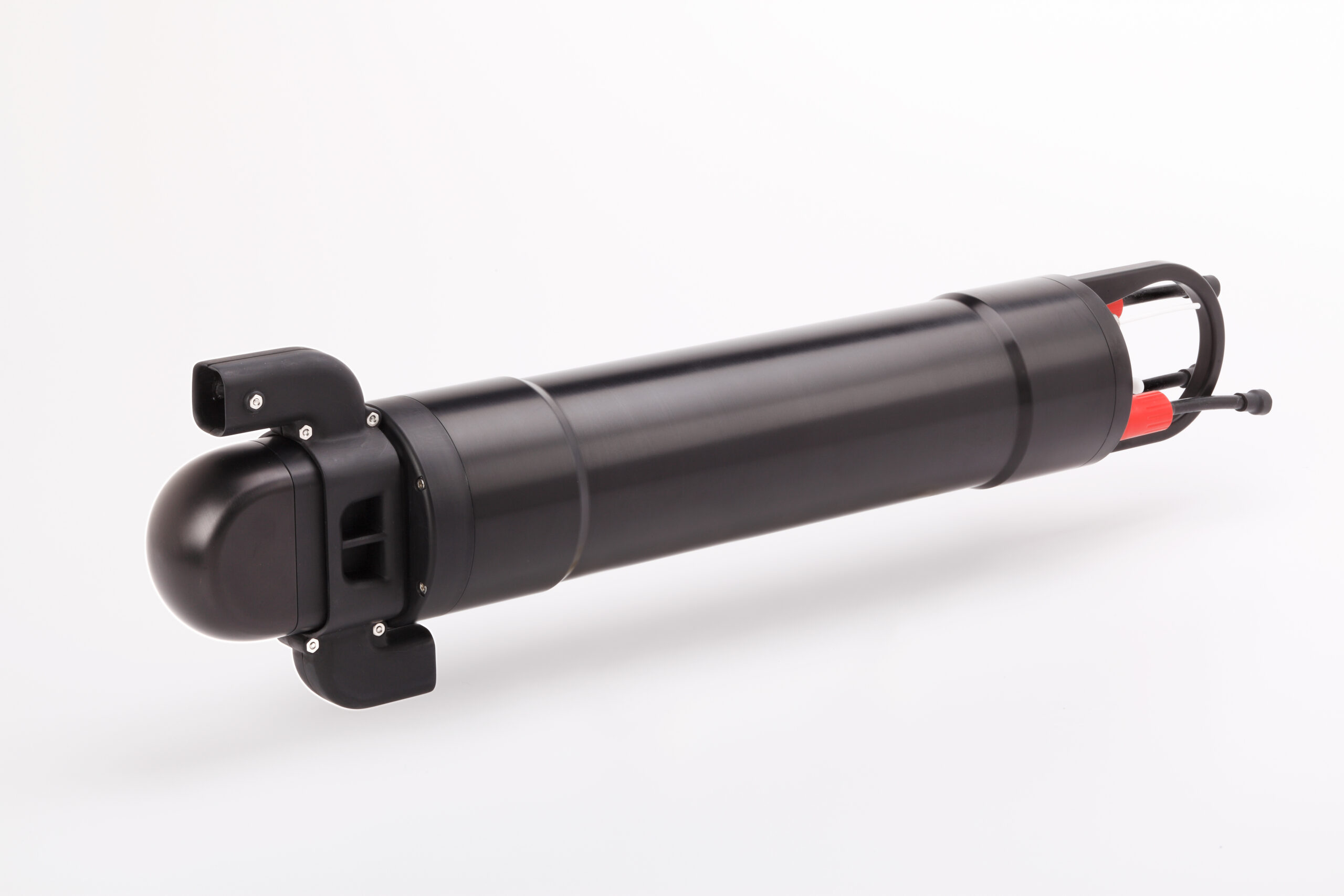
- Dimensions 10.03 cm (3.95”) Ø x 63.9 cm (25.2”) L
- Weight: 5.4 kg (11.9 lbs) in air, 1.7 kg (3.8 lbs) in water
- Operating depth: 600 meters max (200 meters for optional BioBlock accessory)
- External power input: 12 VDC nominal, 9-24 VDC
- Sampling rate: Up to 1 Hz
- Current drain at 12 V: 75 mA when Sampling (100 mA for serial number 2130 and earlier)
- Data storage: 1 GB (~12,000,000 size distributions)
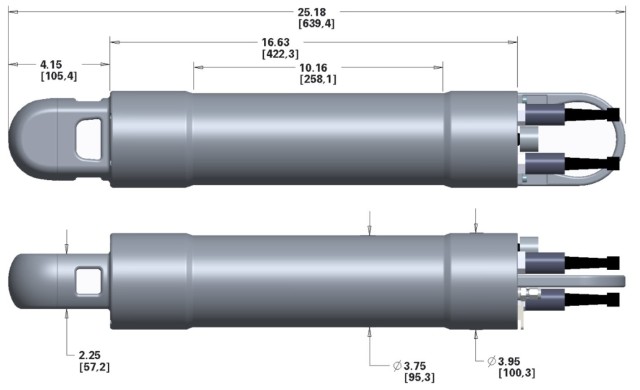
Large external battery housing
- Dimensions 10.03 cm (3.95”) Ø x 53.4 cm (21.0”) L
- Weight (including 16 Alkaline D cells): 5.2 kg (11.9 lbs) in air, 1.5 kg (3.3 lbs) in water
- Small external battery housing
- Dimensions 6.35 cm (2.5″) Ø x 30.2 cm (11.9″) L
Weight
-

LISST-200X Battery Dimensions
FAQ
What does the LISST-200X measure?
The LISST-200X measures the size and concentration of particles suspended in water. It can measure particles from 1 to 500 microns.
It also measures the water temperature, depth, and optical transmission.
How does the LISST-200X differ from the LISST-100X?
The LISST-200X is very similar to the LISST-100X, but improved in almost every way. It makes the same particle size and concentration measurements. However, it is smaller, measures a wider range of sizes and can measure higher concentrations. It also can output Mean Size and Total Concentration as analog voltages that can be monitored in real time, such as through a CTD, while the detailed size distribution and concentration information is stored on-board the instrument. For full details see the Feature Comparison: LISST-200X vs. LISST-100x
How deep can the LISST-200X operate?
The LISST-200X has a maximum depth rating of 600 meters which is twice the depth of the LISST-100X. For deeper applications you can use the LISST-Deep instrument which is rated to 4,000 meters.
Can I add the LISST-200X to my CTD?
The LISST-200X has been designed to plug right into existing CTD systems. It has a dedicated 6-pin connector that is pin-to-pin compatible with SeaBird CTDs. The LISST-200X will receive power from the CTD and output the Mean Size and Total Volume Concentration as analog voltages that can be viewed in real-time through the CTD cable.
It is also possible to output the full size distribution in real-time. See FAQ ‘Does the LISST-200X process and output data in real-time?’ below.
Read this article to figure out what CTD cable to order.
How fast can I tow or profile the LISST-200X?
The LISST-200X uses laser diffraction to measure the size and concentration of particles. This scattering occurs at the speed of light. The speed of the water and particles passing through the laser beam does not change measurement. As long as bubbles not being generated or shear forces are breaking up particles of interest speed does not effect the measurement.
How long does the Small External Battery last?
The LISST-200X Small External battery uses two rechargeable NiMH D-cells. The LISST-200X can sample continuously at 1 Hz for 6 to 8 hours before the batteries will need to be replaced or charged. We provide 4 batteries with the LISST-200X so that two batteries can be charged while two are being used. An Excel spreadsheet is available to estimate the life of the battery when using different sampling conditions such as a burst every 15 minutes.
Can I use the LISST-200X as a laboratory particle size analyzer?
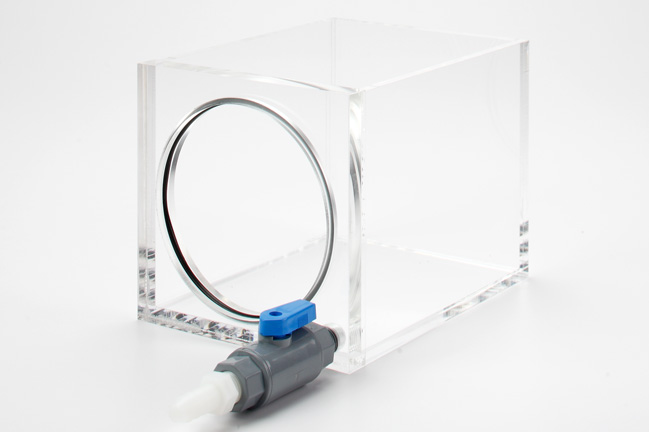
The LISST-200X is designed to be used submerged in water as its primary function. However, like with the LISST-100X, we offer small chambers with a built-in mixer or flow through capability that allows you to use the LISST-200X in the lab as a particle size analyzer.
If the primary function of the instrument is to be laboratory instrument you might consider the LISST-Portable|XR particle size analyzer which is specifically designed to be used for laboratory particle sizing.
Does the LISST-200X process and output data in real-time?
Yes. The LISST-200X s/n 2131 and higher can process and output the complete particle size distribution on the RS-232 serial connector at 0.5 Hz. This requires firmware version 2.102 or higher and LISST-200X software version 1.14 or higher. Contact Sequoia support for more information.
What languages are supported?
As of October 2021, the LISST-200X software supports English and Danish. Contact us to enquire about the possibilities for getting the software in your language.
How does the LISST-200X compare to the discontinued LISST-100X?
Can I rent the LISST-200X?
Yes. Sequoia has a rental unit available. The minimum rental period is one (1) month and the first month’s rent must be prepaid in full before the instrument is delivered. Subsequent months are invoiced at net 30 days payment terms. User must pay for the return shipping to Sequoia, and insure the instrument for the full price for the duration of the rental period as well as the return shipping.
If you decide to purchase a new instrument within 90 days after the beginning of the rental period, you can apply 85% of what you already paid in rental fees towards the cost of the new instrument.
Call for a draft LISST-200X rental agreement.
How does the Path Reduction Module (PRM) accessory work?
The PRM is an optional LISST-200X accessory that can be purchased from Sequoia. With the standard path length of 25 mm, the LISST-200X can measure suspended sediment concentrations up to ~ 665 mg/l for medium silt particles (~16 um diameter). The PRM shortens the optical path to 5 mm and allow measurements up to a concentration of ~3,300 mg/l for medium silt. See the PRM manual (Software & Downloads) for more details.
Can I use the BioBlock accessory in dry conditions? (E.g. on flood plains, salt marshes)?
Running the BioBlock in dry conditions is not ideal and should be avoided. The wiper is of similar material to a car wiper, so it is designed to work with a layer of water on the windows. The shutter wiper would wear down faster and can potentially lead to damages on the windows if a sediment grain is stuck to the wiper.
One solution to avoid running in dry conditions is by configuring the instrument to sample at certain depths. This can be setup in the LISST-200X software by selecting a specific depth as the start and stop condition.