Connecting two or more identical batteries in parallel multiplies the energy available to your instrument, so a deployment runs about twice as long with two packs and three times as long with three, without changing the sampling schedule. Alkaline packs often perform slightly better.
On a long oceanographic mooring, a buoy or a remote survey, the instrument rarely runs out of memory first. Instead, it runs out of energy. Every sample, every laser pulse and every hour of sleep draws from a fixed reserve of watt-hours, and when that reserve is spent the deployment is over. Sampling less often extends the deployment, but at the cost of data. Connecting two identical batteries in parallel keeps the schedule you want and doubles the reserve behind it.
This article explains how parallel packs work, the rules for doing it safely, and two worked examples with oceanographic instruments: the LISST-200X particle size analyzer and the LISST-Holo2 holographic camera.
How Batteries in Parallel Work
In a parallel connection the positive terminals are joined together and the negative terminals are joined together. The instrument still sees the voltage of a single pack, but it can draw on the combined capacity of all of them.
- Voltage stays the same. Two 12 V packs in parallel deliver 12 V, so the instrument runs within the same input range it already uses with one pack.
- Capacity adds. Two 20 Ah packs give 40 Ah; three give 60 Ah.
- Energy adds. Energy in watt-hours is voltage × amp-hours, so two HCBAT packs store 2 × 240 Wh = 480 Wh.
- Runtime scales with energy. With the same sampling schedule, twice the watt-hours means roughly twice the days in the water (a little less for NiMH, which self-discharges, and a little more for alkaline).
Batteries in Series vs Parallel
By contrast, a series connection adds voltages instead: two 12 V packs in series give 24 V at the same 20 Ah. As a result, series wiring would push the supply above the instrument’s rated input and must be avoided. For the cell-level details, see Battery University’s guide to series and parallel battery configurations.
Rules for Connecting Batteries in Parallel Safely
Batteries in parallel work well only when they behave as one. For that reason, follow these rules every time.
- Use identical packs. Same part number, same voltage, same capacity, for example two SEQ-AC-LISST-HCBAT. Never parallel an HCBAT with an RBAT: their voltages differ (12 V vs 14.4 V), so the packs would not share the load.
- Never mix chemistries. Never pair a rechargeable (NiMH) pack with a non-rechargeable (alkaline) pack, for example an RBAT with an LHO-EBP. Because their voltages fall differently as they discharge, one pack would carry most of the load, and the NiMH pack could also try to charge the alkaline cells, which are not made to be recharged. The Holo2’s built-in NiMH pack is the exception: the Holo2 draws on its approved external pack first and keeps the built-in pack in reserve, so the two never share the load.
- Start at the same state of charge. Fully charge every rechargeable pack, or fit fresh alkaline cells in every alkaline pack, right before deployment, so the packs share the load evenly.
- Use a rated Y Battery Cable. The Y Battery Cable and every connector must carry the full instrument current and survive the deployment depth. Most Sequoia subsea battery packs are rated to 600 m; the LDP-EBP is rated to 4,000 m. The weakest part sets the depth limit for the whole assembly.
- Check the instrument compatibility first. Only parallel packs that are already approved for your instrument on the battery options page.
Example 1: LISST-200X Battery Packs in Parallel
For the LISST-200X, two HCBAT batteries in parallel give 480 Wh, double a single pack, and three give 720 Wh. The 200X is compatible with four external packs; however, only the three larger ones are practical choices for paralleling.
 LISST-200XSubmersible particle size analyzer
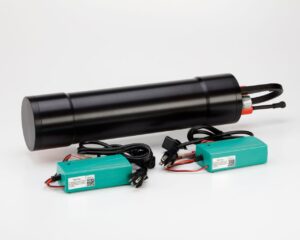 SEQ-AC-LISST-HCBATRechargeable · 12 V 20 Ah
 SEQ-AC-L200X-LEBNon-rechargeable · 12 V 39 Ah
Choosing a LISST-200X Setup
LISST-200X Battery Life Results
With the LISST-200X battery life calculator at its default settings (one averaged sample every 60 seconds, no accessories), the 200X draws 0.10 W on average, or 2.3 Wh a day. Selecting Add a second, identical pack in the calculator gives the following results:
Where the energy goes
Where the energy goes
All LISST-200X Setups Compared
| Setup | Stored | Usable | Battery life | Samples |
|---|---|---|---|---|
| Rechargeable (NiMH) | ||||
| 1 × RBAT | 144 Wh | 115 Wh | 42 days | 60,854 |
| 2 × RBAT | 288 Wh | 230 Wh | 82 days | 118,118 |
| 1 × HCBAT | 240 Wh | 192 Wh | 69 days | 99,409 |
| 2 × HCBAT | 480 Wh | 384 Wh | 132 days | 189,411 |
| Non-rechargeable (alkaline) | ||||
| 1 × L200X-LEB | 468 Wh | 304 Wh | 131 days | 188,214 |
| 2 × L200X-LEB | 936 Wh | 646 Wh | 274 days | 394,306 |
A second pack gives just under double the days (132 rather than 138 for the HCBAT) because NiMH cells keep self-discharging for the whole deployment, and a longer deployment loses more to it. On the other hand, two LEB packs do better than double (274 days rather than 262): each cell carries half the current, so more of its capacity is usable (69% rather than 65%). Enter your own sampling schedule in the battery life calculator for results specific to your deployment.
Example 2: LISST-Holo2 Battery Packs in Parallel
For the LISST-Holo2, adding two LHO-EBP batteries in parallel extends the deployment fivefold, from 12 to 60 days. The Holo2 always carries a built-in 14.4 V 15 Ah NiMH pack, and an approved external pack (RBAT or LHO-EBP) adds to it. In practice, the Holo2 runs from the external pack first and switches to the built-in pack when the external one is spent. With the LISST-Holo2 battery life calculator at its default program (a 500-image burst at 25 FPS every 30 minutes) the Holo2 uses 13.7 Wh a day, most of it spent waking for each burst.
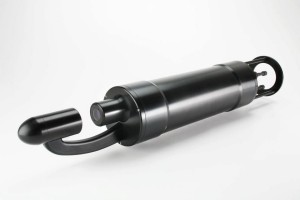 LISST-Holo2Holographic particle imaging system
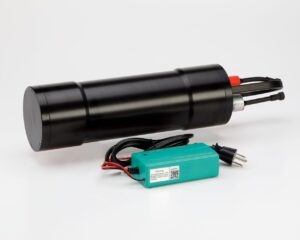 SEQ-AC-LISST-RBATRechargeable · 14.4 V 10 Ah
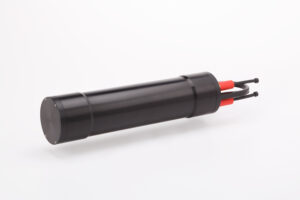 SEQ-AC-LHO-EBPNon-rechargeable · 15 V 39 Ah
Choosing a LISST-Holo2 Setup
LISST-Holo2 Battery Life Results
Where the energy goes
Where the energy goes
All LISST-Holo2 Setups Compared
| Setup | Stored | Usable | Battery life | Images |
|---|---|---|---|---|
| Built-in pack only | 216 Wh | 173 Wh | 12 days | 284,644 |
| External pack: rechargeable (NiMH) | ||||
| Built-in + 1 × RBAT | 360 Wh | 288 Wh | 19 days | 456,365 |
| Built-in + 2 × RBAT | 504 Wh | 403 Wh | 26 days | 615,503 |
| External pack: non-rechargeable (alkaline) | ||||
| Built-in + 1 × LHO-EBP | 801 Wh | 471 Wh | 32 days | 770,979 |
| Built-in + 2 × LHO-EBP | 1,386 Wh | 863 Wh | 60 days | 1,439,042 |
As the table shows, LHO-EBP packs add far more days than RBAT packs. Each LHO-EBP holds Procell PC1300 Constant alkaline D cells for 585 Wh (15 V × 39 Ah), four times an RBAT’s 144 Wh, and alkaline cells self-discharge very little while NiMH loses 12% in the first month. Results use the calculator’s derating: NiMH is 80% usable, and the alkaline LHO-EBP is set automatically from the current each cell carries (51% with one pack, 59% with two).
Battery Life Formula: Estimating Your Runtime
For batteries in parallel, runtime in days is the usable energy of all packs divided by the instrument’s average power draw over a day. The same method applies to any underwater battery pack powering oceanographic sensors.
- N = number of identical packs in parallel
- V × Ah = one pack’s rated energy in watt-hours (for example 12 V × 20 Ah = 240 Wh for an HCBAT)
- f = usable fraction of the rated energy, below 1 to allow for cold water and pack ageing; for alkaline packs it also falls as the current per cell rises
- Pavg = the instrument’s average power in watts over your sampling cycle, including sleep between samples
Since the average power depends on your instrument settings and schedule, the most reliable way to get it is the battery life calculator. Select your pack, enter your sampling program, then select Add a second, identical pack to see the parallel result. The calculator also includes each pack’s derating and self-discharge; therefore, its answer is more accurate than simply doubling the one-pack figure.
Pre-Deployment Checklist for Batteries in Parallel
- All packs share the same part number and chemistry: no rechargeable (NiMH) pack paired with a non-rechargeable (alkaline) one
- Every pack is fully charged, or fitted with fresh alkaline cells
- Y Battery Cable tested with all packs connected
- The Y Battery Cable and connectors are rated for the deployment depth
- Expected runtime confirmed in the battery life calculator, with the second pack selected
- Packs and cable secured to the frame and connections tested on deck
Compare every pack on the full battery compatibility chart.